Cupid Arrow: A Designer’s Real-World Embroidery Review
First Impression: Sweet, Simple, and Slightly Surprising
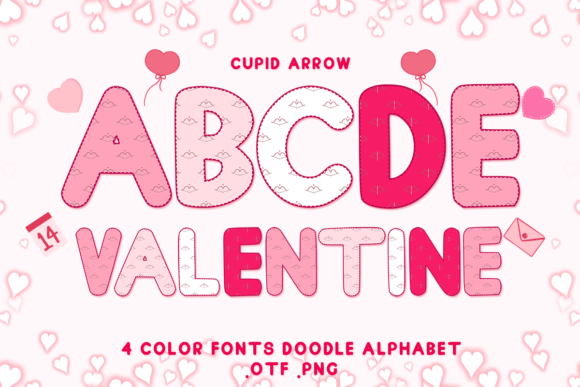
When I opened Cupid Arrow for the first time, I wasn’t expecting a font — I was expecting an icon. That’s how strongly its theme lands. It’s not just “Valentine’s Day cute.” It’s playful, heart-led, and intentionally uncluttered — with soft curves, gentle arrowheads, and letterforms that feel like they’ve been sketched with affection, not algorithm. As a designer who’s stitched hundreds of fonts onto baby onesies, boutique aprons, and Etsy tote bags, I immediately saw its sweet spot: personalized gifts where charm matters more than complexity.
Real Project Test: Embroidering It on a Linen Tea Towel
Last week, I used Cupid Arrow to embroider “You’re My Arrow” on a natural linen tea towel — a small-batch item for my local craft fair booth. I chose a 4-inch hoop, medium-weight cutaway stabilizer, and two-tone thread (soft rose for letters, deep burgundy for the tiny heart dot above the ‘i’). The result? Clean, legible, and warm — no skipped stitches, no thread nesting. Because Cupid Arrow avoids ultra-thin lines and tight kerning, it held up beautifully on linen’s open weave. Customers paused at the booth not because it shouted, but because it invited: soft enough for nursery decor, confident enough for wedding kitchen gifts.
Where Cupid Arrow Shines — and Where It Needs Care
Cupid Arrow thrives in projects where warmth and intention are part of the product story:
- Custom apparel: Works especially well on crewneck sweatshirts and relaxed-fit tees — the rounded forms soften the structure of heavier fabrics.
- Baby embroidery: Gentle proportions and open counters make it ideal for onesies and burp cloths (just avoid stitching directly over seams or elastic).
- Embroidered patch: Its balanced weight and modest height mean it digitizes cleanly into sew-on patches — no floating threads or dense fill stitch traps.
- Holiday embroidery: Not just for February — I’ve used it on spring picnic blankets and “You’re My Person” pillow covers for bridal showers.
- Digital embroidery file previews: Renders clearly in printable mockups, even at thumbnail size — great for Etsy sellers needing fast, trustworthy visuals.
But let’s be real: Cupid Arrow isn’t built for every surface. Use caution on:
- Curved surfaces like caps — the baseline isn’t engineered for heavy distortion; test stitch on a cap blank before committing.
- Thin or stretchy fabric (e.g., lightweight rayon or jersey) — its moderate stitch density needs solid support. Always pair with tear-away + light cutaway stabilizer.
- Dark fabric — while charming in pastels, it loses some definition in low-contrast thread combos. Stick to high-contrast pairings (ivory on navy, charcoal on blush) unless you want a whisper-soft effect.
- Tiny hoop sizes under 3 inches — the design’s personality lives in its proportions. Shrinking it too far blurs the heart detail and softens the arrow’s point.
How It Shapes Your Handmade Product — Beyond the Stitch
As a craft business owner, I don’t just ask “Does it stitch?” — I ask “Does it sell?” Cupid Arrow adds quiet professionalism to handmade products. It doesn’t scream “craft fair,” but it *feels* hand-chosen — which builds customer trust faster than flashy fonts ever could. On an embroidered tote bag, it reads as thoughtful, not trendy. On a personalized gift, it signals care, not convenience. And for Etsy sellers? Its clean silhouette converts well in mobile thumbnails, and its Valentine’s-ready mood gives seasonal listings strong visual cohesion — without locking you into one holiday.
Designer Notes You’ll Actually Use
Before stitching Cupid Arrow into your next project, here’s what I do — every time:
- Test on scrap fabric — same type, same stabilizer, same thread colors. Linen behaves differently than cotton twill, and Cupid Arrow’s flow shifts subtly across textures.
- Check thread color contrast in natural light — especially if using variegated or matte threads. Its charm relies on readability, not texture alone.
- Review stitch density in your embroidery software. If it’s dense in the curved strokes, reduce fill density by 5–10% for breathable fabrics like tea towels or baby blankets.
- Confirm hoop size compatibility. This isn’t a 2-inch monogram font — respect its breathing room.
- Inspect small details — especially the arrowhead tip and heart dot. Zoom in. If those vanish when scaled down, adjust or choose another layout.
- Test black-and-white mockups — many customers browse in grayscale mode. Does the shape still read clearly?
- Compare light/dark backgrounds in your design software. What looks balanced on screen may need a thread swap on black denim.
- Verify licensing — since Cupid Arrow is listed as a Color Fonts product, confirm whether commercial use (e.g., selling finished embroidered sweatshirts or digital embroidery files) is permitted before listing on Etsy or your small shop.
Final Thought: A Font With Heart, Not Just Hook
Cupid Arrow won’t replace your go-to script for elegant monograms or your bold sans for streetwear lines. But it fills a space many designers overlook: the quiet, confident voice of handmade love. It’s the kind of machine embroidery design that makes a baby onesie feel like a keepsake, turns a kitchen towel into a cherished gift, and helps a small shop stand out — not with noise, but with nuance. If your work centers on connection, care, and real people giving real gifts, Cupid Arrow belongs in your design assets. Just stitch it with intention — and always, always test first.