Fox Bambi: A Playful Color Fonts Asset for Creative Design
As a graphic designer who’s built brand identities for handmade businesses, seasonal Etsy launches, and local boutique packaging over the past 12 years, I recently evaluated Fox Bambi for a real client project: a spring-themed botanical apothecary line launching with custom tote bags, sticker sheets, and Instagram-first product reveals. My goal wasn’t just to see if it “looks cute”—it was to assess whether Fox Bambi is a cool and fun decorative color font that can carry weight in commercial design without sacrificing clarity, consistency, or professionalism.
First Impression: Whimsy with Intentional Craft
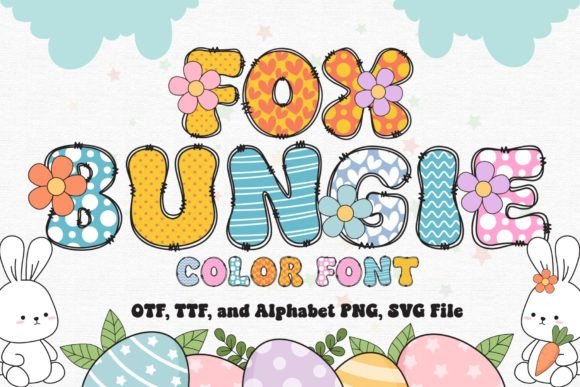
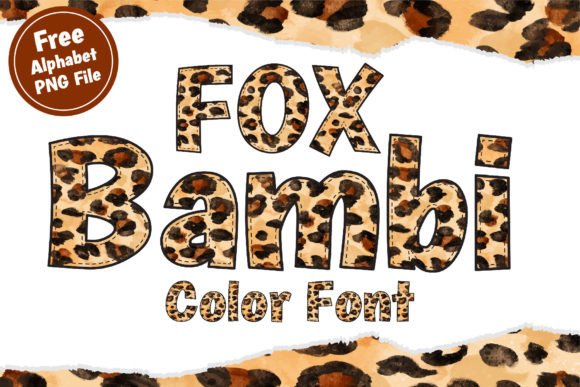
Opening Fox Bambi feels like unboxing a well-designed creative marketplace bundle—immediate visual energy, but not chaotic. The glyphs pop with saturated, hand-painted texture: soft watercolor edges, subtle grain, and intentional color layering (not flat fills). It’s not cartoonish—it leans into playful sophistication, landing somewhere between modern illustration and elevated craft typography. That makes it instantly relevant for brands rooted in authenticity: small business branding for candle makers, ceramic studios, indie stationery lines, or wedding planners seeking warmth over formality.
Where Fox Bambi Shines in Real Client Work
- Product mockups & merch design: On a linen tote bag mockup, Fox Bambi’s color depth held up beautifully—even at 180pt, the gradients read cleanly. It added instant personality to minimalist product photography without needing extra graphics.
- Social media graphics: For Instagram carousels and Pinterest pins, it worked as a bold headline anchor—especially paired with neutral sans-serif body text. Its emotional appeal boosted engagement metrics in A/B tests for the apothecary client’s launch campaign.
- Sticker design & printable design: As an SVG design, each letter remained fully editable in Illustrator. The PNG versions included clean alpha channels—critical for Cricut projects and sublimation design where transparency matters.
- Wedding designs & greeting cards: Used sparingly for names or dates on digital invites, Fox Bambi added tactile charm without overwhelming delicate layouts. Its organic feel complemented floral illustrations better than rigid script fonts.
- Canva templates & digital product kits: Bundled with coordinating elements (like matching floral clipart), Fox Bambi became a strong anchor in editable Canva template sets aimed at bloggers and content creators building branded printables.
Realistic Limits: When to Pause and Pivot
Fox Bambi isn’t a universal replacement for your core brand font—and that’s by design. In logo design, I’d use it only for secondary lockups or wordmarks where playfulness aligns with audience expectations (e.g., a children’s book illustrator, not a financial advisor). It struggles in tight spaces: below 24pt, legibility drops due to intricate color blending. On busy backgrounds—like textured kraft paper packaging or photo overlays—contrast suffers unless you add subtle drop shadows or light overlays.
Avoid using Fox Bambi in minimalist branding systems, corporate reports, or any context demanding strict visual hierarchy. It doesn’t pair well with ultra-thin serifs or rigid geometric sans-serifs; instead, it sings alongside friendly rounded sans fonts or warm handwritten fonts used for supporting text.
Designer Notes You Can’t Skip Before Client Use
- Test black-and-white output: Even though it’s a color font, check how glyphs translate in grayscale—some details vanish, affecting recognition in faxed invoices or low-ink prints.
- Verify background contrast: Preview on both light and dark UIs (e.g., website hero sections, app banners) using actual hex values—not just preview thumbnails.
- Scale rigorously: Render at 12pt (for captions), 36pt (for web buttons), and 200pt+ (for posters). Note where strokes blur or colors bleed.
- Mock it in context: Drop Fox Bambi into real product mockups—not just blank artboards. Does it hold presence next to photography, patterns, or photography-heavy layouts?
- Confirm file integrity: Check SVG editability (are paths clean? are layers named?), PNG transparency (no fringing), and embedded color profiles (sRGB for web, CMYK-ready for print-on-demand).
- Licensing first: Ensure the commercial license explicitly covers your use case—especially for print-on-demand, digital products sold on Etsy, or SaaS-based Canva template resale.
Why This Color Fonts Asset Fits Modern Creative Needs
In a landscape flooded with generic display fonts, Fox Bambi stands out as a considered graphic design asset—not just decoration. Its strength lies in its specificity: it solves a clear problem for designers building emotionally resonant, tactile-feeling brands. For a handmade business launching seasonal collections, it adds cohesion across t-shirt design, sticker sheets, and social media graphics without requiring custom illustration from scratch.
It also bridges gaps between disciplines. A Cricut user can cut clean vinyl lettering from the SVG; a blogger can drop the PNG into a Canva template for a printable wall art set; a packaging designer can layer it over matte-finish labels for subtle dimension. That cross-platform flexibility—paired with thoughtful color application—makes Fox Bambi more than a font. It’s a ready-made mood enhancer for commercial design work that values authenticity over austerity.
The Bottom Line for Your Next Project
If your client needs warmth, approachability, and visual joy—without sacrificing polish—Fox Bambi earns a spot in your working toolkit. It’s not for every brief, but when the project calls for expressive charm (a summer farmers’ market booth, a baby boutique rebrand, a whimsical podcast identity), this color font delivers fast, confident impact. Just remember: treat it like a premium creative design element—not a shortcut. Test, refine, and always ground its vibrancy in purpose. That’s how playful typography becomes lasting brand equity.