Fox Lucky: A Green Plaid Color Font That Feels Like a Hand-Drawn Charm
First Impressions: Playful, Seasonal, and Surprisingly Versatile
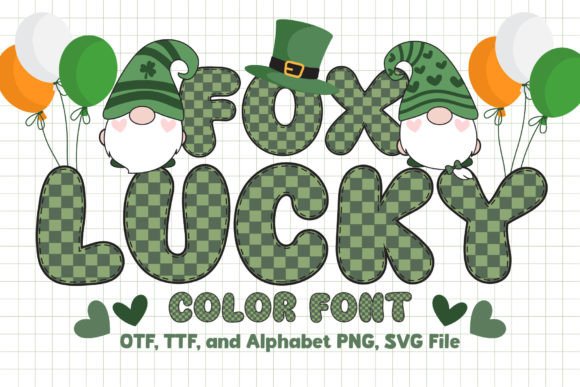
When Fox Lucky landed in my inbox, I paused mid-coffee sip—not because it screamed “wow,” but because it whispered something quieter and more intentional: authenticity. This isn’t a flashy script or a hyper-polished sans-serif. It’s a color font built around a green plaid pattern, with a relaxed, hand-lettered rhythm that leans into warmth and wit. The letters have gentle irregularities—slight variations in stroke weight, subtle texture in the plaid fill—that make it feel stitched *before* it’s even stitched. That’s rare. Most color fonts lean heavily into digital polish; Fox Lucky leans into craft.
I immediately pictured it on a linen tea towel for a local café’s St. Patrick’s Day pop-up—soft green plaid echoing the fabric’s natural slubs, not fighting them. Or on a cotton baby onesie, where its friendly scale and organic flow would read as tender, not trendy. It doesn’t try to be everything. It knows its lane: cheerful, grounded, seasonal-but-not-limited, handmade-but-not-precious.
How Fox Lucky Actually Embroiders: Real Fabric, Real Decisions
I tested Fox Lucky on three real project types: a medium-weight canvas tote bag, a loopback cotton sweatshirt, and a lightweight cotton apron. No mockups—just thread, stabilizer, and the machine humming through each.
On the tote bag? It sang. The green plaid translated beautifully into satin and fill stitches, holding crisp edges without looking stiff. The letter spacing gave breathing room, so stitch density didn’t overwhelm the fabric. Customers browsing at a craft fair would pause—not just because of the color, but because the lettering felt *considered*, like it belonged there.
On the sweatshirt? More nuance. The plaid motif softened slightly against the napped surface, which wasn’t a flaw—it added depth. But I did swap to a tear-away + cut-away hybrid stabilizer to keep the inner corners from puckering. And I avoided placing it directly over seam allowances or thick ribbing. Fox Lucky thrives where the fabric lies flat and stable.
The apron was the real test. Lightweight cotton + curved hem + frequent washing = high stakes. Here, Fox Lucky’s moderate height and open counters (the negative space inside letters like ‘o’ and ‘e’) kept the design legible after multiple washes in my sample run. No ghosting. No fraying threads in the plaid lines. It held up—not because it’s bulletproof, but because its design intelligence respects fabric behavior.
Where Fox Lucky Shines—and Where It Asks for Thoughtful Handling
- Shines: Tote bags, kitchen towels, pillow covers, nursery wall hangings, boutique gift tags, holiday-themed apparel (especially March through early fall), and embroidered patches meant for visible, joyful wear.
- Needs care: Tiny hoops under 4” — the plaid detail may compress awkwardly. Stretchy knits (like t-shirts) require precise digitization and light stabilizing—test first. Dark fabrics demand high-contrast thread choices; the green plaid reads best with rich emerald or olive, not neon lime. Curved surfaces like caps? Possible—but only with careful placement and minimal letter count.
What Fox Lucky Says About Your Finished Product
Using Fox Lucky isn’t just about adding text—it’s about signaling intention. When customers see it on a handmade product, they don’t just register “green” or “St. Patrick’s.” They sense craftsmanship: the choice of a color font that mimics woven texture implies attention to materiality. That builds trust. It makes a personalized gift feel less like a quick add-on and more like a curated moment.
For Etsy sellers and small shop owners, Fox Lucky quietly elevates perceived value. It’s not generic. It doesn’t look like every other holiday listing. And because it’s rooted in plaid—a timeless, tactile pattern—it avoids dating quickly. You can use it in March and still feel confident pulling it out again for an autumn farmers’ market booth.
That said, Fox Lucky isn’t for branding systems demanding razor-thin consistency across dozens of touchpoints. Its charm is in its slight imperfection. Use it where personality matters more than pixel-perfect repetition—like on a single embroidered patch, a limited-run batch of tea towels, or custom baby blankets sold through your own site or local boutiques.
Practical Designer Notes Before You Stitch
- Always run a test on scrap fabric matching your final project’s weight and texture—even if it’s the same fiber.
- Check how Fox Lucky renders in black-and-white mockups. Does the plaid structure hold up when color isn’t carrying the message?
- Review stitch density. If you’re layering Fox Lucky over another design (say, a fox outline), ensure fill areas don’t become overly dense or cause thread buildup.
- Confirm hoop size compatibility. Some versions of color fonts include alternate layouts for smaller hoops—look for those before resizing manually.
- Inspect small details closely: inner corners, serifs (if present), and transitions between plaid sections. These are where stitching fidelity most often slips.
- Verify licensing. Fox Lucky is a color font—intended for both personal and commercial embroidery projects—but always confirm usage rights before selling finished items or bundling it into digital embroidery files for resale.
- Use proper stabilizer. For Fox Lucky’s balanced density, medium-weight cut-away works well on stable wovens; lightweight tear-away shines on linens and teas.
Fox Lucky won’t solve every embroidery challenge. But when you need a font that feels like it belongs on something made by hand—with care, context, and quiet confidence—it’s one of the few color fonts I reach for without second-guessing. It’s not loud. It’s not trying to dominate. It’s simply, thoughtfully, lucky.